

Air Force veteran Edward Moraga shares his path to law school, the faith and community that sustain him, and his hopes for fellow veterans thinking about law school.
During his first week at San Joaquin College of Law (SJCL), U.S. Air Force veteran Edward Moraga was living in a hotel. He and his wife had moved from San Diego and were still looking for an apartment. Classes were starting before they’d finished settling in and a question he’d carried for years kept coming back: Could he really do this?
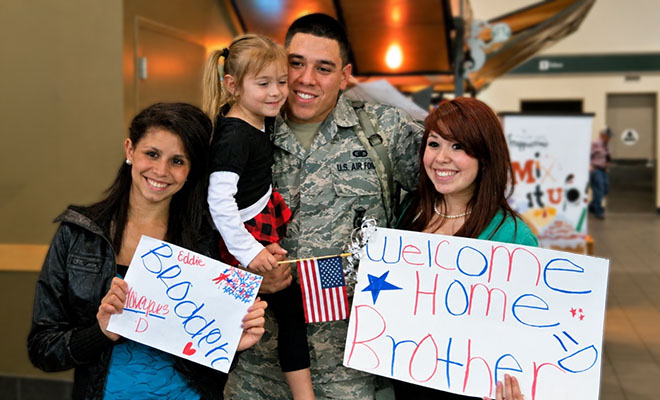
His wife believed in him, his undergraduate professors had encouraged him, and SJCL had accepted him. Still, uprooting their lives for a future he couldn’t fully picture brought those doubts into sharper focus. He knew his wife was making a sacrifice by moving with him and that added to the pressure he was already feeling.
Now a second-year law student, Edward is finding his footing and helping other veterans imagine a place for themselves in law school. He’s working to create a student veterans organization at SJCL, drawing on what he’s learned about starting over, asking for help, and continuing even when confidence hasn’t quite caught up.
For veterans wondering whether they’re ready for a new direction, Edward’s story offers an honest look at the work required and the people who can help along the way.
A Bigger World Beyond Modesto
Edward wanted to join the Air Force in high school and even wrote his senior paper about it. Becoming a father at 18 changed his plan to enlist right after graduation, but the idea still stayed with him. About two years later, while working in a warehouse, he decided to follow through. He contacted a recruiter, started preparing, and went to boot camp.
Over four years of service, his world grew far beyond the one he’d known in Modesto. Born in Arizona, he’d visited family outside California before, but living and working alongside people from across the country was a whole new experience. At boot camp in Texas, he met recruits with different accents, backgrounds, and ways of seeing things. He later served in security forces, the Air Force’s military police, at Offutt Air Force Base in Nebraska and spent six months deployed to Oman.
“I just realized there was more to life, more to what's out there than just the four walls of Modesto,” he said.
Those years in the military taught him to work with people he hadn’t chosen, respond under pressure, and look out for the people beside him. He didn’t know it then, but those experiences would give him important skills he could draw on in law school.
Finding Direction After His Military Service
Leaving the Air Force in 2012 was harder than Edward expected. He looked forward to civilian life but once he was out, he didn’t know what was next. He struggled with depression and turned to alcohol to escape what he was feeling. Finding direction took time and several different kinds of work.
“I got out of the military and I was completely lost. I didn't know what to do,” he said.
That experience is part of why he cares so much about helping other veterans through the transition. While living in San Diego, he talked with service members preparing to leave the military, asked about their plans, and checked in on them. He understood their excitement, but he also knew that life afterward could be different from what they expected.
“I know the other side, and I know how easy it is to get lost,” he said. He wanted them to have people they could turn to and a plan they could start working toward once they got out.
For Edward, law school eventually became that direction. But getting there meant reconsidering something he’d believed about himself for a long time.
Rethinking What He Could Do After the Military
Becoming an attorney originally felt out of reach. Edward was drawn to law, but he didn’t think he was smart enough to actually pursue it. He traces that belief back to being discouraged by an elementary school teacher and to his experience in special education shaping the way he understood his abilities.
“It just made me think school's not for me and that I wasn’t gonna be a school person. I thought I'm just gonna have to figure out life another way,” he said.
His undergraduate experience helped change that. He found a program he enjoyed and professors who believed in him, giving him a reason to question those old limits he’d accepted for himself. Taking the LSAT was a way to explore what might be possible with law school, even though he was nervous about the outcome.
“I didn't want to let fear get the best of me,” he said.
He took the LSAT exam and applied to law school without knowing whether he’d be accepted. His faith helped him take that step: if this path didn’t work out, he trusted that God would open another door.
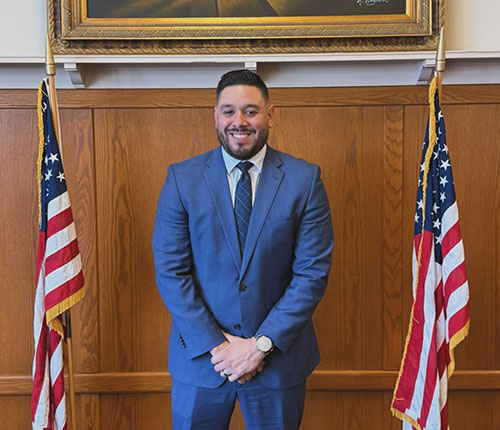 Finding His Way to San Joaquin College of Law
Edward’s wife graduated from SJCL and encouraged him to look at her alma mater, but he wasn’t immediately convinced. They were living in San Diego at the time and moving to Fresno wasn’t something he was eager to do. But she wanted him to consider more than just the location, including the professors, community, and the support she knew he’d have at SJCL.
Even applying to law school took a little help. On the last day applications were due, his account was frozen and he was worried the school wouldn’t be able to access his materials. He called SJCL’s Director of Admissions, Diane Steel, who walked him through the problem and reassured him they’d work it out. Her patience and guidance mattered at a time when he was already feeling overwhelmed.
He was accepted and a campus visit helped him see what his wife had talked about, so he was more willing to make the move. Today, he enjoys the drive to campus, the view of the Sierra Nevada mountains, and the life they’re building together in Fresno and Clovis.
Going to law school also meant stepping away from another possible future. Edward had been volunteering at a church where a pastor was mentoring him toward a ministry role. It was work he knew and felt comfortable doing. Changing direction for law school meant possibly disappointing someone who’d invested in him, as well as taking on something unfamiliar.
“I figured I had to step outside of the boat and give this thing a try,” he said. “I just didn't know what was around the corner, so I just believed and prayed on it.”
His Christian faith was important throughout his first year, especially when he worried about succeeding and letting his wife down after she’d made the move with him. Prayer helped him work through those doubts and looking back, he’s clear about where he places his gratitude.
“I wouldn't be where I'm at if it wasn't for God.”
Why Law School Felt Like Boot Camp
Once classes started, Edward found a familiar way to understand the challenge of law school. He was outside his comfort zone, surrounded by people learning to navigate something new, and being asked to think and respond differently. It reminded him of boot camp.
Military training had taught him to work under pressure. Law school asked him to develop that skill while learning how the law actually works. Where he might once have reacted to a headline with an immediate opinion, he was learning to look at the rules and processes behind it instead. Seeing his first year as preparation helped him make sense of the demands, even when he didn’t have everything figured out.
He welcomed one significant difference from boot camp: the professors weren’t shouting at him. He remembers Professor Goodrich’s challenging cold calls, where students worked through case questions in class, and the conversations that followed afterward.
“But she wasn't yelling. She was nice about it and I would talk to her pretty much every day after class too.”
The questions were demanding, but he knew he could keep asking questions of his own too. That combination of challenge and support helped him continue learning instead of feeling like he needed to understand everything right away.
Learning to Keep Going With People Beside Him
Edward describes law school as the hardest academic work he’s ever done. His first round of finals brought long stretches of studying and moments when he wondered how he’d find the energy to prepare for the next exam. Getting through his first year showed him that he could push himself further academically than he’d ever thought possible.
The doubts haven’t disappeared. He still has days when he questions whether he’s smart enough, but now he can look back on the work he’s already done as proof he can do it. Reading, studying, and coming to class help him build on that confidence as he goes.
“I don't always feel smart enough, but I’m still pushing through. I’m still showing up,” he said. “And I joke around with people that I'm just too dumb to quit. I just keep showing up and that's my secret. I just show up.”
Having people rooting for him makes a big difference, too. As he got to know classmates and upper-level students, he started asking more questions, talking through ideas, and admitting when something didn’t make sense. He sees students sharing notes and helping their classmates understand the material, much like the camaraderie he appreciated in the military.
“Everyone pretty much looks out for each other and we're all going through it together. Everyone pretty much has that kind of mentality,” he said. “So I actually really appreciate that.”
He credits SJCL’s faculty and staff with helping create that environment, too. Professor Atkinson stands out because he’s so approachable and willing to help, qualities Edward sees in his other professors as well. For someone who once thought school wasn’t for him, being able to ask questions and find support has made a big difference during his time at SJCL.
Creating a Place for Other Veterans
Edward wants to build on that sense of connection by forming a student veterans organization at SJCL. The effort is still in its early stages, with conversations among veterans and plans for bylaws. His first goal is creating a welcoming place where veterans can find and lean on each other while they’re adjusting to law school, with a foundation that other students can carry forward after he graduates.
Some veterans will be preparing for a second career, returning to school after some time away, or balancing their education with family responsibilities. Edward wants them to have someone nearby who understands part of that experience and can help them feel comfortable starting a conversation.
Eventually, he’d like those connections to extend beyond campus to veterans practicing law in the Fresno area. He hopes students can meet local attorneys who offer perspective, encouragement, and mentorship as they prepare for their own careers. For now, he’s focused on getting the organization started.
“I don't know what it looks like, I'm just taking the first step to get it started and lay the foundation,” he said.
That willingness to help also extends to veterans still deciding whether law school is for them. Edward doesn’t expect to have every answer to their questions, but he wants them to know he’s a resource they can reach out to.
“I might not know it all, but I can point you in the right direction,” he said. “If there's something I can't answer, I'll help you find somebody and we'll figure it out.”
Giving Law School a Serious Look
Edward’s encouragement always comes with a practical reminder to think about what law school will require of a student and their family.
“You always want to count the costs. Sit down and think about it because it's going to be a lot to go to law school. It's going to take some sacrifice,” he said.
That means thinking through the time commitment, finances, and changes to family life, and asking questions before deciding whether it’s the right path for you.
He encourages prospective students to tour schools and look beyond the school’s name to the community they’d be joining. Can they picture themselves there? Would they feel comfortable asking teachers and classmates for help? What resources are available when the work gets difficult? His own experience showed him how much those answers actually matter.
He also wants veterans to give law school a fair look rather than counting themselves out before they fully explore it. They don’t need to have every answer figured out, but they do need to understand the commitment and be willing to do the work.
“Don't make up excuses for yourself. Don't let the excuses win. Don't let the fear win,” he said.
Start With a Conversation at Our Veterans to Law School Event
For a veteran thinking about law school, meeting someone who’s made a similar transition from the military can make it easier to ask questions. You can hear what advice helped, what was difficult, and what they wished they’d known before starting. Edward knows how much it can mean to recognize part of your own story in someone else’s.
Join us for our Veterans to Law School event on Wednesday, November 4, 2026, from 6 to 8pm at the Clovis Veterans Memorial District. Veterans and their families are welcome to meet our panelists Andrea Chapman, Vladimir Pacheco, and James Proctor and learn about their paths into the legal profession.
“You don't have to do it on your own,” Edward said. “I would encourage people to come to the event and meet other veterans. It's always fun meeting other veterans, it's something I actually enjoy.”
If you’ve been wondering whether law school could be part of your next chapter, bring your questions. You’ll meet people who’ve been there and learn what taking that first step might look like for you.