

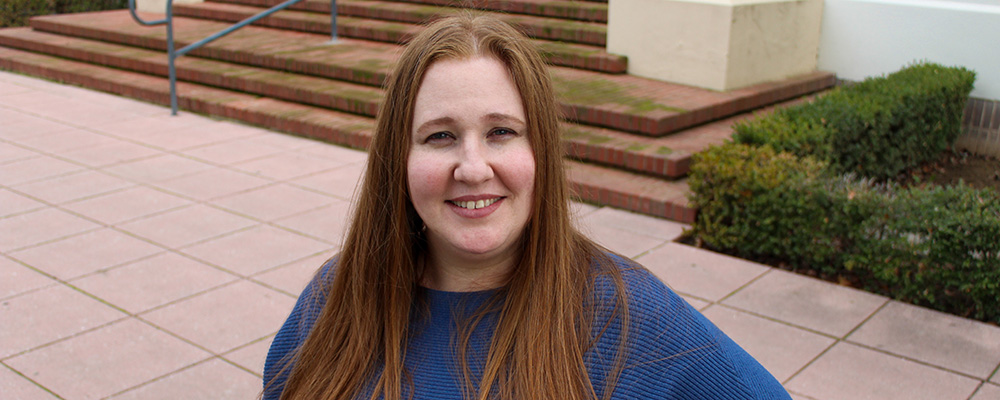
Meet Jodie Howard, a San Joaquin College of Law alumnae (Law ‘19) and Director of the BREN Special Education Legal Clinic. As the parent of a student with autism, her passion for bringing special education legal services to the Central Valley has led her to become a voice for many parents and students. Learn more about Jodie, how she went from managing a skate park to becoming an attorney and why she believes it takes a village to bring much-needed changes to local special education services.
Tell us a little bit about yourself and your road to SJCL.
I was a stay-at-home mom for about 10 years before law school and my son has autism, so I found myself advocating for him a lot with the school district for his special education services. That’s what got me geared towards attending San Joaquin College of Law, but it was truly my husband’s idea. He joked because I was reading about the law all the time to fight for Bren (our son) and he said I should just go to law school. One day, I came home and had LSAT prep books on our kitchen table, so we agreed that I would study and take the test but if I didn’t do well enough to get in, then we’d drop it. I got in, went to law school and while I was here, I was trying to figure out how I could bring special education legal services to the Central Valley and luckily, I was able to find funding to start the BREN Clinic. We’ve only been open since August, so I’m helping to build this clinic to bring more of those necessary services to our community.
Are you from the Central Valley?
No, I actually grew up in Hawaii and my husband spent half of his childhood in Los Angeles and the other half here in the Central Valley. In college, I traveled to California while doing some work for my church and I met him while I was here. I graduated from high school in Hawaii and went to college in Utah at Brigham Young University where I majored in Recreation Management - I was one of those crazy kids that actually wanted to get off the island, so I came to the mainland for school. My husband was still at UCLA when I graduated from college, so he had a little bit of time left in school and I decided to move to California when we first got married. Before I became a stay-at-home mom, I ran a skate park for the City of Los Angeles. I originally applied with the city to run a recreation center, but between the time I first applied to them doing final interviews, they were getting ready to open their first skate park. They offered me the job but it included running the skate park and I didn’t want to initially, but I ended up absolutely loving it. For me, it was a much better experience than running a regular recreation center and it worked out really well. I don’t skate or anything like that, but I got along with the skaters really well and I was able to put together competitions and helped ease some tension that existed between the skaters and politicians. When we found out my son had autism, I quit my job so that I could stay home with him since my husband had already graduated from UCLA. Shortly after that, we moved from Los Angeles to the Central Valley.
Why did you choose SJCL?
When my husband told me we were moving to Clovis and there was a law school, I didn’t believe it. I had no idea SJCL was here and I’ve driven by it a lot because I would take my kids to the library down the street, but I just never realized it was a law school. It ended up being so convenient because we weren’t prepared to relocate our family in order for me to go to law school and like the skate park, SJCL ended up being a great fit for me. I loved the school, I loved the professors and I loved the small community feel as well.
What was it like for you as a full-time mom and law school student?
By the time I decided to go, it was a matter of me either finding a job or going back to school because the kids were getting older (my son was in sixth grade and my daughter was in fourth grade). I found that Bren was stabilizing and I wasn’t getting calls from the school very much, so I knew I could start filling my day with other things rather than just focusing on his needs. For my nights during law school, I truly had the most amazing husband in the world because he was almost a single parent for about three or four years while I was in law school. It took so much of my time and even when I was home, I’d be in my office studying with the door locked and a note on the door. I definitely had to sacrifice some mommy time, my house got crazy messy and we didn’t always eat very healthy, but we made it and it was all worth it.
What is something you learned about going to law school that no one told you about?
I knew law school was going to be hard and time-consuming, but I don’t think you can ever fully appreciate just how much it is until you’re thrown into it. You can’t mentally prepare yourself for it until you’re right in the middle of it and then you find out whether it’s something you’re capable of doing or not. You definitely discover some things about yourself and your abilities in law school.
What advice do you have for maintaining a healthy work/school/life balance?
My husband and I had a date night every Friday night throughout law school. The only time we may not have gone out would’ve been right before finals or while I was studying for the Bar. For the most part though, we did date night every Friday and I would spend at least half of my Sunday with my family. For me, that’s what it took in terms of my family schedule - I had to set aside specific times and make sure I had all my reading done before then so I could enjoy that time with my husband and family. That’s how I balanced things and the rest of my life was pretty much dedicated to law school. During the summers and winter break, it eased up a bit and I was able to spend time with my family since the kids were also on break.
What’s your experience been so far with special education law?
When I was in law school, there were no attorneys in the Central Valley that really practiced special education law. I ended up talking to some attorneys in the Los Angeles area and had an arrangement with them to work remotely. I didn’t get a lot of client-facing work, but I did a lot of motions for the court and letters for the school districts on behalf of the parents. So for a couple of years, I was able to get some experience in special education law in that way. Before law school, I was just a mom advocating for her son and trying to help other people advocate for their children by learning about their rights and what they could do for their children. As a parent of a child with autism, it definitely adds a human element for me as an attorney to understand where my clients are coming from when they come in to talk about their child’s education.
Tell us about the BREN Clinic and its mission.
The BREN Clinic’s mission is to help individuals in our community with disabilities gain the services and support that they need to reach their fullest potential. In order to do that, it takes educating them and their family members about what their rights are. A lot of times the law is actually designed to protect individuals with disabilities and give them additional rights and services that people without disabilities don’t need or have access to. The problem is if you don’t know what those rights and services are, then you don’t know how to ask for them or advocate to receive them. Or if you do find out about them and ask, the program you reach out to may tell you they don’t have to provide those services and many people take that on the surface as fact. But when you actually dive into the law, there’s a lot more to it and those conversations should be a lot longer in determining what services and support that individual with disabilities needs and it’s the same way with the school districts. I’m hoping one day the BREN Clinic can cover other aspects of the law to help individuals with disabilities, but for now we’re just focusing on special education law so that those individuals in our community can get the support they’re entitled to and reach their full potential as adults and have the most independent lifestyle that they’re capable of having. Everybody with a disability is affected differently - some are capable of complete independence while others will still need help along the way, but they can be a lot more independent than we realize by just giving them support while they’re young.
How does it make you feel knowing you’re the voice for so many people with disabilities?
It’s overwhelming but it’s also empowering because it’s something that we’ve needed in our community for so long. Before I got my Bar results and officially able to take on clients, the first thing the BREN Clinic started with was opening up classes to the community. We’ve had more than 150 people take those classes so far and we’ve only been around since last August. When people heard about it, they were so excited because it’s something we’ve needed for so long and it’s amazing to meet the parents. When they sign up for the classes, they have to attend 11 sessions and each of them is three hours long. They’re making a huge commitment with 33 hours of their time to hear me talk about the law and you don’t usually get a response like that from the community because people don’t care to learn about the law that much.
What are you teaching parents about in the BREN classes?
During my third year of law school, I replaced a regular elective with a research project and that in turn became the book that we now use as the curriculum for the class. The book dives into what’s known as the Individuals with Disabilities Education Act (IDEA) and it covers quite a bit about that law from when a parent initially believes there might be something not developmentally right with their child and how to approach the school district for evaluations to find out if their child has a disability and if they do, whether or not that qualifies them for special education. We start at the beginning and go through the entire special education process - the referral, the assessment, the eligibility determination, the Individualized Education Plan (IEP) and then determining what placement is best for them. That placement could be in a general education class with non-disabled peers or it could be a special day class with other kids with disabilities. We also have a class that covers discipline - if your child is being disciplined for something that they do because of their disability, there’s a host of rights that are attached to that because you can’t punish someone because of their disability. There’s another section that discusses an Individual Transition Plan (ITP) that’s supposed to be created during their final years of high school to help them get ready to leave their safe environment in school with tons of support and transition into the world. Those are just some of the topics, but there’s a wide range of information that we strive to provide to parents.
What are some changes you’d like to see the BREN Clinic make within the community?
First and foremost, I want parents to be more informed and we have a long way to go but we’ve definitely started that with the classes. Second of all, I want parents to have a place where they can come (whether they’ve taken the classes or not) to talk about their issues with the school districts and get help resolving things for their children. I’ve had parents come in already and we just brainstorm and talk about what the law says about their specific issues because a lot of special education is creative thinking. How a child is affected by their disability is how to best determine what the school district can do for them. It’s not like with typical kids where there’s just a state plan and all the students try to follow the state standards. We have to come up with an individual plan for every single student with a disability based on their abilities and their disability. Having parents brainstorm ways to individualize their child’s plan with me or even with other parents who’ve taken the class has been so helpful because we haven’t had any place like that in town other than state agencies with a few offices here, but they’re been so impacted. Each time I called an agency as a parent, they didn’t have the staff to provide any help for me so I’m hoping that the BREN Clinic can be its own community in a sense and parents can help other parents or SJCL students who can take the class and help brainstorm ideas and approaches to educate parents.
How can parents and community members get more involved with the BREN Clinic?
We’ve got our website and that’s really all we’ve done so far, which is really empowering for me. I haven’t really had to advertise about the clinic, but every class has been full so far and we’ve reached our capacity during registration. We’re primarily relying on word of mouth right now between other parents, but the best way to get involved would be to take the course. Once you’ve taken the classes, I’m starting a volunteer program where new parents can meet with parents who’ve already gone through the course to brainstorm. Ideally, after they’ve met and come up with some great ideas, they can be funneled through me for review so I can make sure things don’t violate the law and are viable options. I don’t want the BREN Clinic to become like the state agencies and become a place where parents can’t get help. With parent volunteers, we can help facilitate a lot of other help for new parents and just put our stamp of approval from our attorneys to make sure their plans comply with the law.
How can SJCL students get involved with the clinic?
I’m putting together a class they can register for (similar to the NALC Clinic) where they’ll spend a few hours each week in lecture, but most of the class will consist of working in the BREN Clinic. The students will meet with parents who need some help with their child’s Individualized Education Plan (IEP) or have an issue with the school district that they need resolved. Students can even attend Individualized Education Plan (IEP) meetings with the parents and school district. It may even get to the point where we have to file a complaint against the school district and the students can help represent the parents in court through the BREN Clinic. So students will get real, hands-on attorney experience while they’re working with us.
How does it make you feel knowing your work is impacting the community like this?
When I was waiting for my Bar results, I kept telling my husband that I felt like the whole community was riding on my exam and if I didn’t pass, the whole BREN Clinic would have to be put on hold so I could take the Bar again. In that way, it’s a little overwhelming but the parents are amazing and there’s so many that want to get involved and see the clinic succeed because they know how much we need it. That alone helped me overcome those overwhelming feelings and responsibilities because everyone is pitching in and I’m getting so much support from our Dean and our funding sources, so it’s more than just me and it’s amazing to be a part of it.
Want to learn more about San Joaquin College of Law, sit in on a class or set up an appointment to discuss your law school future? Contact our Admissions Counselor, Francisco "Javier" Rosas today!